

 中文简体
中文简体
 English


Content
- 1 What an Air Operated Cylinder Does and How It Converts Air Pressure Into Force
- 2 Single Acting vs Double Acting Air Cylinders: Which Design Fits Your Application
- 3 Matching Bore Size, Stroke Length, and Rod Diameter to Your Load
- 4 Cushioning, Speed Control, and Cycle Life in Pneumatic Air Cylinders
- 5 Where Air Operated Cylinders Are Used Across Industrial Applications
- 6 Air Cylinder vs Hydraulic Cylinder vs Electric Linear Actuator
- 7 Cylinder Body Materials and Construction Standards
- 8 Maintenance, Seal Wear, and Troubleshooting Common Air Cylinder Problems
- 9 Frequently Asked Questions About Air Operated Cylinders
- 9.1 What is the difference between an air cylinder and a pneumatic actuator?
- 9.2 How do I calculate the force output of an air operated cylinder?
- 9.3 Can an air cylinder run on shop air, or does it need a dedicated compressor?
- 9.4 How long do air cylinders typically last before needing repair?
- 9.5 Why does my air cylinder move faster on retraction than extension?
- 9.6 What causes an air cylinder to stall under load?
- 9.7 Can an air cylinder hold a load in a fixed mid-stroke position?
- 9.8 What is the difference between a compact cylinder and a standard tie-rod cylinder?
- 9.9 Do air cylinders need a specific minimum air pressure to function?
- 9.10 How do I choose between an aluminum and stainless steel cylinder body?
What an Air Operated Cylinder Does and How It Converts Air Pressure Into Force
An air operated cylinder turns compressed air into straight-line mechanical force by pushing a piston through a sealed tube. The force it produces is simple physics: pressure multiplied by piston area. A 4-inch bore cylinder running at 90 PSI generates roughly 1,131 lbs of force on the forward stroke, while the same cylinder at 60 PSI drops to about 754 lbs. This relationship is why bore size and supply pressure are the first two numbers any engineer checks before specifying an air cylinder for a job.
Inside the cylinder, compressed air enters through a port at one end of the barrel, forcing the piston toward the opposite end. A piston rod, connected to the piston, extends through a rod seal and gland, transferring the force outside the cylinder to whatever load it is pushing, lifting, clamping, or pressing. On the return stroke, air is either exhausted while a spring pushes the piston back (single acting design) or air is admitted to the opposite port while the first side exhausts (double acting design). Both configurations fall under the broader category of pneumatic air cylinders and are selected based on how much control is needed over the return motion.
Because compressed air is compressible, an air cylinder does not move with the same rigid precision as a hydraulic cylinder. This is actually an advantage in many applications: it gives the mechanism a natural cushioning effect against shock loads, which is one reason air cylinders remain the preferred actuator in packaging lines, pick-and-place robotics, and clamping fixtures where speed and moderate force matter more than absolute rigidity.
The Core Components That Make Up an Air Cylinder
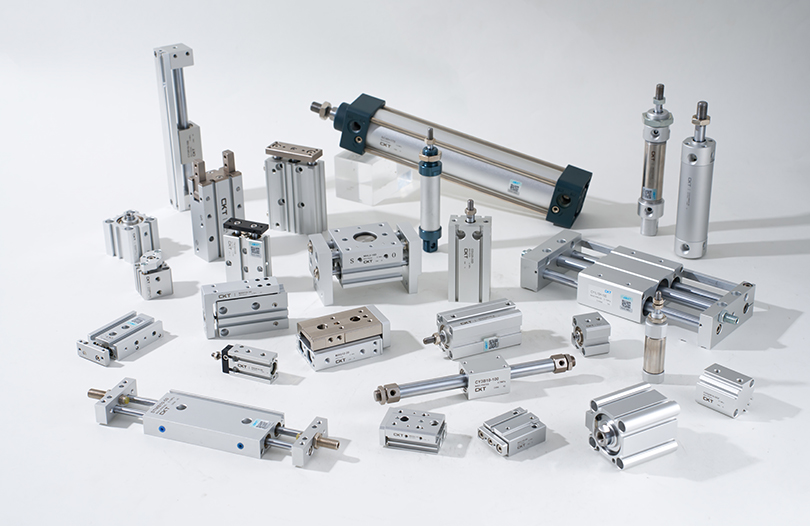
Every air operated cylinder, regardless of manufacturer or bore size, is built from the same basic set of parts. The barrel, or tube, is a precision-honed cylindrical shell that houses the piston and provides the sliding surface the piston seals ride against. The two end caps, often called the head and cap, seal the barrel at each end and provide the air ports, mounting features, and in most designs the rod bushing that guides the piston rod. The piston itself carries the primary seal, a rubber or polyurethane ring that separates the two pressure chambers and allows the piston to slide with minimal friction while maintaining an airtight barrier.
Tie rods, four long bolts running the length of the cylinder outside the barrel in most industrial designs, clamp the two end caps and the barrel together under tension. This tie-rod construction is what allows a cylinder to be disassembled for seal replacement without cutting or welding, and it is also what gives the cylinder its resistance to internal pressure trying to force the end caps apart. Lighter-duty cylinders sometimes use a threaded or crimped barrel construction instead of tie rods, trading serviceability for a smaller footprint and lower manufacturing cost.
Why Compressed Air Is Chosen Over Other Power Sources
Compressed air has several properties that make it attractive as an actuation medium compared to hydraulic fluid or electric motors. Air is free once compressed, it does not need to be returned to a reservoir the way hydraulic fluid does, and a leak in an air system creates a hiss and a minor efficiency loss rather than a fluid spill that must be cleaned up and disposed of. Air cylinders are also inherently safer in explosive or flammable environments, since there is no risk of an electrical spark from a motor winding or a controller, which is why pneumatic actuation remains standard in paint booths, grain handling, and solvent-heavy manufacturing processes.
Single Acting vs Double Acting Air Cylinders: Which Design Fits Your Application
The single biggest decision point when specifying an air operated cylinder is whether the application needs power on both strokes or only one. Single acting cylinders use air pressure to drive the piston in one direction and rely on a mechanical spring, gravity, or an external load to return it. Double acting cylinders use compressed air to drive the piston in both directions, giving controlled force and speed on extension and retraction.
| Feature | Single Acting | Double Acting |
|---|---|---|
| Air ports | 1 | 2 |
| Return method | Spring or load | Air pressure |
| Air consumption | Lower | Higher |
| Typical stroke length | Short, under 6 inches | Any length |
| Common use | Clamping, stamping, ejecting | Conveying, lifting, positioning |
Single acting spring-return cylinders lose part of their working force to the spring itself, since a portion of the incoming air pressure is spent compressing the return spring before any useful output force is delivered. This is why single acting designs are generally limited to shorter strokes; beyond a certain length the spring becomes too long, too weak, or too bulky to fit inside a reasonably sized housing. Double acting air cylinders avoid this limitation entirely, which is why nearly every long-stroke or high-cycle industrial application defaults to a double acting design.
Rodless Cylinders: An Alternative When Space Is Limited
A rodless air cylinder moves a carriage along the outside of the barrel instead of extending a rod, using either a mechanical slot-and-seal linkage or a magnetic coupling between an internal piston and an external carriage. This design cuts the overall length of the actuator roughly in half compared to a rod-style cylinder of the same stroke, since there is no extending rod that needs clearance space beyond the stroke length. Rodless cylinders are common in gantry systems, pick-and-place stations, and long conveyor transfer applications where floor space or overhead clearance is limited.
Tandem and Duplex Cylinders for High-Force or Compact Applications
A tandem cylinder joins two cylinder bodies on a single shared rod, effectively doubling the force output for a given bore size without increasing the diameter of the actuator. This is useful when a job needs more force than a single cylinder of that bore can deliver, but there is no room to step up to a larger bore diameter. Duplex cylinders, by contrast, mount two cylinders end to end on the same rod to create three or four distinct stopping positions rather than the usual two, which is a common solution in applications that need multiple fixed stroke positions without adding external stop hardware or a servo-controlled actuator.
Telescopic Air Cylinders for Long Strokes in a Short Retracted Length
Telescopic cylinders nest multiple stages of decreasing diameter inside one another, allowing a retracted length that is a fraction of the fully extended stroke. While more common in hydraulic dump-truck applications, pneumatic telescopic cylinders are used where a very long stroke is needed but the retracted envelope must stay compact, such as certain lift-gate and access-platform designs. The tradeoff is a stepped force output, since each stage has a progressively smaller effective bore area than the one before it.
Matching Bore Size, Stroke Length, and Rod Diameter to Your Load
Selecting the correct air cylinder starts with calculating the force needed and working backward to a bore size. The core formula is straightforward: Force (lbs) = Pressure (PSI) x Area (square inches), where area is calculated from the piston bore diameter. A safety margin of at least 30% above the calculated static load is standard practice, since friction, seal drag, and pressure drop across the supply line all reduce the force actually delivered at the rod end.
| Bore Size | Force at 60 PSI | Force at 90 PSI | Force at 120 PSI |
|---|---|---|---|
| 1.5 in | 106 lbs | 159 lbs | 212 lbs |
| 2 in | 188 lbs | 283 lbs | 377 lbs |
| 3 in | 424 lbs | 636 lbs | 848 lbs |
| 4 in | 754 lbs | 1,131 lbs | 1,508 lbs |
| 5 in | 1,178 lbs | 1,767 lbs | 2,356 lbs |
| 6 in | 1,696 lbs | 2,544 lbs | 3,392 lbs |
Why Stroke Length Affects Rod Diameter Selection
A long, thin piston rod under compressive load can bow or buckle before it ever reaches its rated force limit. This is governed by column buckling behavior, so as stroke length increases, the rod diameter needs to increase as well, even if the force requirement stays the same. As a general guideline, strokes beyond 10 to 12 inches usually call for a rod diameter one size larger than the standard pairing for that bore, and cylinders with strokes over 24 inches often need an intermediate stop tube to prevent the piston from over-traveling into the head of the barrel during high-speed operation.
Rod End and Mounting Style Compatibility
The rod end thread and mounting style must match the mechanism being driven. Common mounting configurations include front flange, rear flange, foot mount, and trunnion mount, each of which changes how bending loads are transferred into the cylinder body. A cylinder mounted with a foot bracket handling a side load, for example, sees far more stress on its barrel-to-head seal than a trunnion-mounted cylinder aligned directly with the direction of travel, which is why mounting style should be chosen alongside bore size rather than as an afterthought.
Seal Material Selection for Different Operating Conditions
The seal compound inside an air cylinder has as much influence on service life as the metal construction. Nitrile (Buna-N) seals cover the widest range of general industrial use and tolerate standard shop air with light lubrication reasonably well. Polyurethane seals hold up better under high cycle rates and abrasive conditions, since polyurethane resists cutting and extrusion damage better than nitrile at the same operating pressure. Viton seals are specified when the cylinder will be exposed to elevated temperatures, typically above 200 degrees Fahrenheit, or to any trace hydrocarbon vapor that would swell a nitrile seal over time. Selecting the wrong seal compound for the environment is one of the most overlooked reasons a cylinder underperforms its rated cycle life, even when the bore, stroke, and mounting were all specified correctly.
Operating Temperature and Pressure Ranges
Standard industrial air cylinders with nitrile seals are typically rated from about 14 degrees Fahrenheit to 175 degrees Fahrenheit, and from vacuum up to 145 to 250 PSI depending on bore size and wall thickness. Cylinders intended for outdoor or unheated environments need cold-rated seal compounds, since standard nitrile becomes stiff and loses sealing effectiveness well before it becomes brittle, causing air leakage and sluggish response before any visible seal damage appears. On the high end, exceeding the rated pressure does not usually cause instant failure, but it accelerates seal wear and increases the load transmitted through the tie rods, end caps, and mounting hardware, shortening service life across the entire assembly rather than just the seals.
Working Through a Sizing Example Step by Step
Consider a clamping application that needs to hold a fixture closed against 400 lbs of separating force, with the shop air supply regulated to 80 PSI. Dividing the required force by the supply pressure gives a minimum piston area of 5 square inches. Working backward through the area formula shows a bore of roughly 2.5 inches meets that minimum, but applying the standard 30% safety margin to account for friction and pressure drop pushes the practical minimum to about 3.25 square inches of margin-adjusted force capacity, which lands the specification at a 3-inch bore cylinder as the next standard size up. This same step by step process, starting from the required force, applying the safety margin, then rounding up to the next catalog bore size, applies regardless of the specific application.
Cushioning, Speed Control, and Cycle Life in Pneumatic Air Cylinders
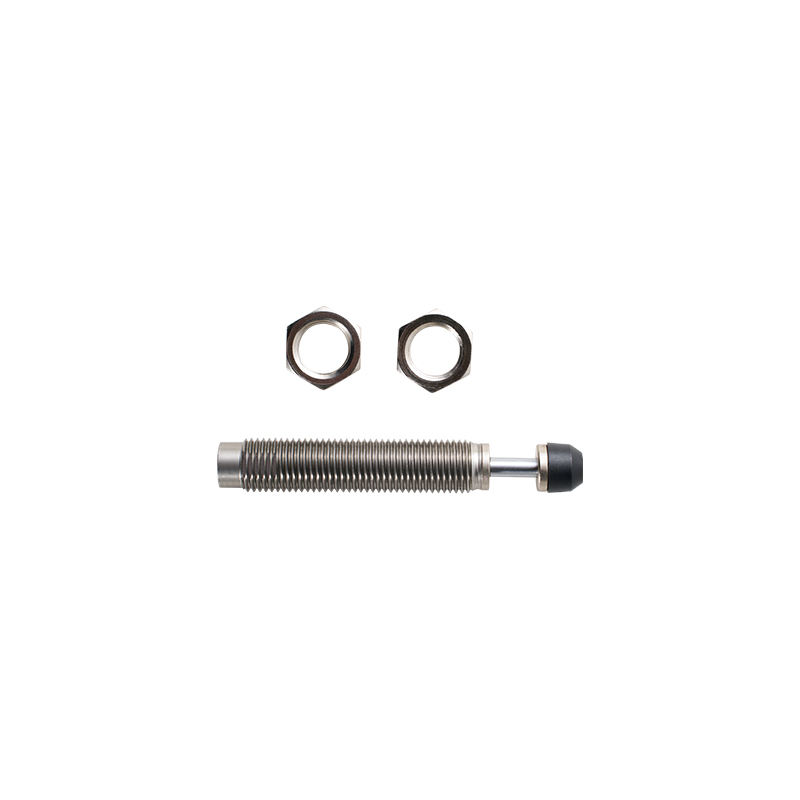
Air cylinders that stop suddenly at the end of their stroke transmit that impact directly into the end caps, and over enough cycles this leads to cracked castings, loosened tie rods, and premature seal failure. Cushioning addresses this by slowing the piston in the final portion of travel, usually the last 0.5 to 1 inch of stroke, using either fixed orifice cushions or adjustable needle-valve cushions.
- Fixed cushions use a tapered plunger that restricts air exhaust at a set rate, offering no adjustment but lower cost.
- Adjustable cushions let a technician fine-tune deceleration with a needle valve, which matters when payload weight varies between production runs.
- Cylinders without cushioning are typically limited to light loads and low cycle rates, since every stop relies entirely on mechanical shock absorption at the end cap.
- Elastomeric bumper cushions, a simpler alternative, absorb a portion of the impact with a rubber pad rather than metering air, trading some cushioning effectiveness for a lower parts count.
Speed control on an air cylinder is handled separately from cushioning, usually through flow control valves installed at each port. Meter-out flow control, where the valve restricts exhaust air rather than incoming air, produces smoother and more predictable motion than meter-in control, particularly on vertical applications where gravity can otherwise cause the piston to run ahead of the supplied air and stutter.
How Line Size and Valve Selection Affect Actual Cylinder Speed
A cylinder's theoretical speed based on air flow rating is rarely what is seen in practice, because undersized tubing, long runs between the valve and the cylinder, and restrictive fittings all add resistance the air has to overcome. A control valve rated for a given flow at a specific pressure drop may still starve a cylinder of air if the tubing between the valve and the cylinder port is too small in diameter or routed with several tight bends. As a rule of thumb, tubing inner diameter should be sized to keep air velocity under roughly 20 to 25 feet per second to avoid excessive pressure drop, and the valve should be mounted as close to the cylinder as the application allows rather than at a distant manifold.
Cycle Life Expectations and What Shortens Them
Cycle life for a properly specified air cylinder commonly reaches several million cycles before seal replacement is needed, provided the air supply is filtered to remove particulate and moisture, and provided the cylinder was never operated above its rated pressure. Contaminated air is the single most common cause of premature seal wear in pneumatic systems, ahead of both misalignment and over-pressurization. High ambient temperature compounds this effect, since heat accelerates the chemical breakdown of most standard seal compounds and reduces the lubricating film thickness on the bore wall, increasing friction and wear rate simultaneously.
Lubrication Practices That Extend Service Life
Many modern air cylinders ship pre-lubricated with a long-life grease designed to last the rated cycle life without further lubrication, and adding an external air-line lubricator to these units can actually wash out the factory grease and cause more harm than good. Older or non-lubricated-for-life cylinders, by contrast, depend on a light film of oil carried in the air stream from an inline lubricator, and running these without lubrication leads to accelerated seal wear within a fraction of the rated cycle count. Checking the manufacturer's specification for lubrication requirements before adding or removing an inline lubricator avoids both of these failure modes.
Where Air Operated Cylinders Are Used Across Industrial Applications
Air cylinders are used anywhere a controlled linear push, pull, lift, or clamp motion is needed without the complexity of hydraulic fluid or the cost of an electric linear actuator. Typical applications include:
- Packaging and palletizing equipment, where fast, repeatable strokes push product into cartons or align boxes on a line.
- Assembly line clamping fixtures, holding parts steady during welding, riveting, or adhesive curing.
- Material handling and sorting systems, where diverter gates and pushers redirect product on a conveyor.
- Food and beverage processing, where washdown-rated stainless cylinders tolerate frequent cleaning cycles.
- Woodworking and metal stamping equipment, where cylinders drive presses, clamps, and feed mechanisms.
- Automotive assembly, actuating door checks, tooling fixtures, and robotic end-of-arm tooling.
- Printing and label converting equipment, where precise, repeatable short strokes control web tension rollers and cutting stations.
- Plastics and rubber molding machinery, operating mold ejector pins and clamping the tool halves between cycles.
- Textile manufacturing, where cylinders control fabric spreading, cutting fixtures, and tensioning devices.
Each of these environments places different demands on the cylinder. A washdown food-grade cylinder needs corrosion-resistant rod material and sealed bearings, while a metal stamping application needs a heavy-duty tie-rod construction rated for shock loading at every cycle. Selecting an air cylinder without accounting for the operating environment is one of the most common causes of early failure, even when the force and stroke calculations were correct.
Packaging Line Applications in Closer Detail
Within packaging equipment specifically, air cylinders typically run at high cycle rates, often several hundred cycles per hour on a continuous line, which puts a premium on both cushioning and seal quality. Short-stroke compact cylinders are favored here because they fit within the tight envelope of a packaging machine frame, and many packaging OEMs specify cylinders with pre-lubricated-for-life seals specifically to avoid the maintenance burden of relubricating dozens of actuators spread across a single line.
Heavy Industrial and Mobile Equipment Applications
In heavier industrial settings such as steel processing, foundries, and mobile equipment, air cylinders are chosen less for cycle speed and more for their tolerance of dirty, high-temperature environments compared to an electric actuator, and for the shock-absorbing compressibility of air compared to a rigid hydraulic system in applications involving sudden impact loads, such as a stamping die or a mechanical stop.
Air Cylinder vs Hydraulic Cylinder vs Electric Linear Actuator
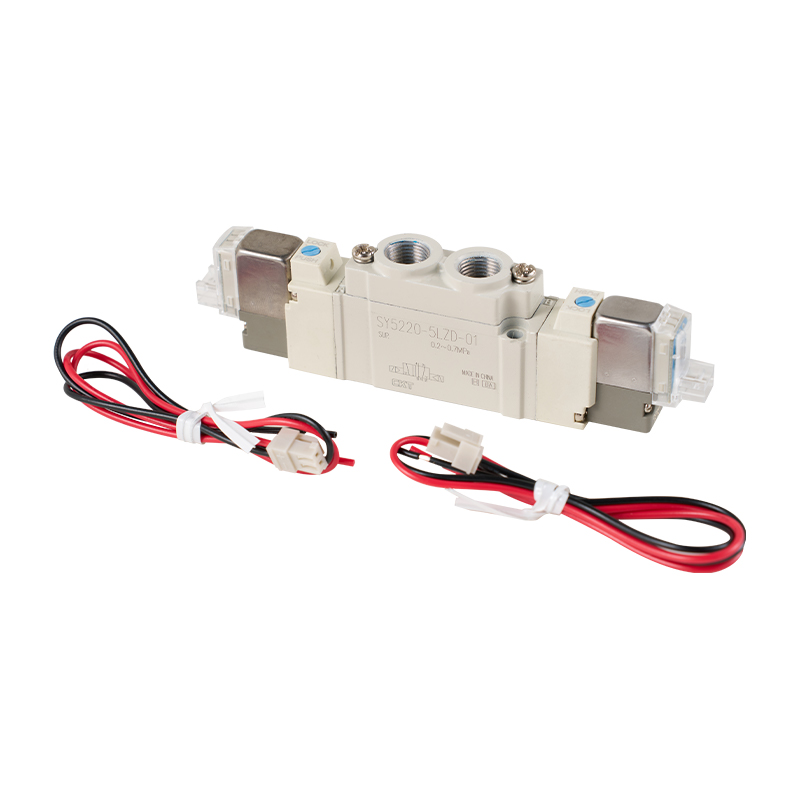
Choosing between an air operated cylinder, a hydraulic cylinder, and an electric linear actuator comes down to force density, precision requirements, and the operating environment. Air cylinders sit in the middle of this comparison: less force-dense than hydraulics, less precise than a servo-driven electric actuator, but simpler, cheaper, and more forgiving of a dirty or hazardous environment than either alternative.
| Attribute | Air Cylinder | Hydraulic Cylinder | Electric Actuator |
|---|---|---|---|
| Force per bore size | Moderate | Very high | Low to moderate |
| Positioning precision | Low without extra sensors | Moderate | Very high |
| Cleanliness of operation | Clean, air only | Fluid leak risk | Clean |
| Typical upfront cost | Low | Moderate to high | Moderate to high |
| Response speed | Fast | Moderate | Fast, controllable |
When an Air Cylinder Is the Right Choice
Air cylinders make the most sense when the application needs fast, repeatable motion between two fixed end points, moderate force, and tolerance for a small amount of compressibility in the motion. They are also the default choice whenever the facility already has a central compressed air supply, since the incremental cost of adding one more air-actuated device is far lower than installing a dedicated hydraulic power unit or wiring a servo drive for a single axis of motion.
When to Consider Hydraulic or Electric Alternatives Instead
Applications needing very high force in a compact bore, such as heavy press work or structural lifting, generally favor hydraulic cylinders, since hydraulic fluid is essentially incompressible and can be pressurized far higher than compressed air without a proportional increase in cylinder size. Applications needing precise, programmable, multi-position control, such as robotic pick-and-place with variable stop points, are usually better served by an electric linear actuator with a servo or stepper drive, since air cylinders are inherently a two-position device unless expensive proportional valves and position sensors are added.
Cylinder Body Materials and Construction Standards
The barrel and end cap material of an air operated cylinder determines both its weight and its resistance to the operating environment. Anodized aluminum is by far the most common construction for standard industrial air cylinders, offering a strong strength-to-weight ratio and natural corrosion resistance suitable for most indoor manufacturing environments. Stainless steel construction, while heavier and more costly, is specified for washdown, food and beverage, pharmaceutical, and outdoor applications where corrosion resistance takes priority over weight.
ISO, NFPA, and VDMA Mounting Standards
Two major standardized mounting families dominate the air cylinder market: the ISO 15552 (formerly VDMA 24562) family common in Europe and Asia, and the NFPA family common in North America. Cylinders built to these standards share common bolt patterns, port locations, and overall envelope dimensions across different manufacturers, which means a cylinder from one supplier can often be replaced with an equivalent model from another supplier without redesigning the mounting bracket or piping. Specifying a cylinder to one of these recognized standards, rather than a proprietary body style, is a practical way to avoid being locked into a single manufacturer for future replacement parts.
Barrel Finishing and Bore Tolerance
The internal bore surface of an air cylinder barrel is typically honed to a fine surface finish, since a rougher bore surface accelerates seal wear and increases breakaway friction, the extra force needed to get the piston moving from a dead stop. Hard anodized or chrome-plated bore surfaces extend service life further in abrasive or high-cycle applications, at a modest additional cost over a standard anodized finish.
Maintenance, Seal Wear, and Troubleshooting Common Air Cylinder Problems
Most air cylinder failures trace back to one of three causes: contaminated air, misalignment with the load, or operating past the rated pressure or temperature range. Recognizing the early symptoms of each helps avoid unplanned downtime.
Air Leaking Past the Piston Seal
A cylinder that slowly loses holding force while pressurized and idle, sometimes called creeping or drifting, usually indicates a worn piston seal allowing air to bypass from one side of the piston to the other. This is normal wear over time but accelerates sharply if the air supply carries moisture or pipe scale, since particulate abrades the seal lip with every stroke.
Rod Seal Leakage and External Air Loss
Air escaping around the piston rod itself, often visible as a faint hiss or a light film of lubricant collecting near the rod gland, points to a worn rod seal or a scored rod surface. A scored rod is frequently caused by side-loading from a misaligned mount rather than the seal itself, so replacing the seal without correcting the alignment typically leads to repeat failure within a short number of cycles.
Sluggish or Erratic Motion
When a double acting cylinder moves unevenly or stalls partway through its stroke, the most common culprit is a partially restricted air line, an undersized valve, or a flow control valve set too tight. Before replacing any component, checking supply pressure at the cylinder port itself, not just at the compressor gauge, resolves a large share of these cases, since pressure drop across long or narrow tubing runs is easy to overlook.
Diagnosing Which Seal Is Actually Worn
A simple soap-and-water leak test applied to the rod gland and around the end caps while the cylinder is pressurized and stationary quickly isolates whether a leak is coming from the rod seal, an end cap gasket, or a fitting rather than the internal piston seal. If bubbles do not appear externally but the cylinder still loses holding pressure over time, the piston seal itself is the likely cause, since air is bypassing internally from one chamber to the other rather than escaping to atmosphere.
Recommended Preventive Maintenance Schedule
A basic preventive maintenance routine for air operated cylinders includes checking air line filters monthly, inspecting rod surfaces for scoring or pitting during scheduled downtime, verifying mounting bolts remain torqued to specification, and confirming cushioning adjustment has not drifted after repeated impact cycles. Following this routine consistently is what separates a cylinder that reaches its full rated cycle life from one that needs early replacement.
| Maintenance Item | Suggested Frequency | What to Check |
|---|---|---|
| Air filter and drain | Monthly | Moisture buildup, filter element condition |
| Rod surface | Quarterly | Scoring, pitting, corrosion |
| Mounting hardware | Quarterly | Bolt torque, bracket cracking |
| Cushioning adjustment | Semi-annually | Needle valve drift, impact noise |
| Seal condition | Annually or at cycle milestone | Internal leakage, external leakage |
Frequently Asked Questions About Air Operated Cylinders
What is the difference between an air cylinder and a pneumatic actuator?
An air cylinder is one specific type of pneumatic actuator that produces linear motion. The broader term pneumatic actuator also includes rotary actuators, air motors, and diaphragm actuators, so every air cylinder is a pneumatic actuator, but not every pneumatic actuator is a cylinder.
How do I calculate the force output of an air operated cylinder?
Multiply the supply pressure in PSI by the piston area in square inches. For a rough field estimate, take the bore diameter, square it, multiply by 0.785, then multiply by the line pressure. Subtract roughly 10 to 15% for friction and seal drag to get a realistic working force rather than the theoretical maximum.
Can an air cylinder run on shop air, or does it need a dedicated compressor?
Standard shop compressed air works fine for most air cylinders as long as it passes through a filter, regulator, and lubricator (an FRL unit) before reaching the cylinder. Skipping filtration is the leading cause of premature seal wear, regardless of how well the cylinder itself was specified.
How long do air cylinders typically last before needing repair?
With clean, dry, properly regulated air and correct alignment, most industrial air cylinders reach one to several million cycles before seal replacement is needed. Cylinders operating in dusty, wet, or high-temperature environments without proper protection see a significantly shorter service interval.
Why does my air cylinder move faster on retraction than extension?
This is usually intentional or the result of differential piston area rather than a defect. On a standard double acting cylinder, the rod side has less effective piston area than the cap side because the rod itself displaces volume, so the same air flow moves the piston faster on retraction than on extension. If the speed difference is unwanted, it can be balanced with flow control valves on each port.
What causes an air cylinder to stall under load?
Stalling usually means the available force at the current supply pressure is too close to the actual load, often because friction, seal drag, or a slightly undersized bore was not accounted for during specification. Increasing supply pressure, upsizing the bore, or reducing the load are the three practical fixes.
Can an air cylinder hold a load in a fixed mid-stroke position?
Not reliably on its own. Because air is compressible, a standard air cylinder will drift slightly under load even with both ports blocked, since the trapped air column compresses under pressure. Applications needing a locked mid-stroke position typically add a mechanical locking cylinder or an external brake rather than relying on trapped air pressure alone.
What is the difference between a compact cylinder and a standard tie-rod cylinder?
A compact air cylinder uses a shorter, often square or round non-tie-rod body to minimize overall length for a given bore and stroke, trading some field-serviceability for a smaller installation footprint. Standard tie-rod cylinders are longer for the same stroke but are fully rebuildable using standard replacement seal kits, making them the more common choice in applications where long-term field maintenance is expected.
Do air cylinders need a specific minimum air pressure to function?
Most standard air cylinders begin producing usable force at pressures as low as 15 to 20 PSI, though friction and seal drag consume a larger proportional share of the available force at low pressure. Applications with light loads can run successfully at reduced pressure to save compressed air energy costs, provided the reduced force still comfortably exceeds the load with margin.
How do I choose between an aluminum and stainless steel cylinder body?
Aluminum bodies are lighter and cost less, making them the default for standard indoor industrial use. Stainless steel bodies are chosen when the cylinder will be exposed to washdown chemicals, high humidity, outdoor weather, or food and pharmaceutical hygiene requirements, since stainless resists the corrosion that would otherwise pit an aluminum barrel over time in those conditions.